Stories of Our Ancestors
Compiled by
Richard Pyper
For his children:
Jefferson & Diane Pyper, Rachel Pyper, Joseph Pyper, Jaquelyn & Steve McCoy, Konrad, Emma, Jeanette, and Leilene Pyper
and his grandchildren:
Josh, Ben, Bridget, Liz, Matthew and Nathan Ethington
Hadley, Liam, and Lincoln McCoy
and his siblings:
Shannon & Mark Rivington, Leigh & Dave Marriott, Anne & Chuck Davis
Ted & Annie Pyper, and James Pyper
and his nieces and nephews:
Katie & Michael Jackson, Kelsey and Ryan Williams,
Kyleigh & Chris Robinson, and Kamryn Rivington
Justin & Maile, James & Dominica Marriott, Tanner & Molly Marriott,
Bayleigh, Lily, and Samuel Marriott
Joshua, Ryan, Megan, and Julia Davis
Anders, Miles, and Benton Pyper
and for all the grandchildren and nieces and nephews to come.
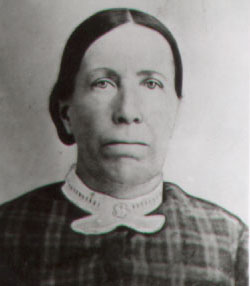
Brave Squaw
One morning in Nephi, Utah your great great great great great grandmother, Mary Noble Gardner was milking a cow. A bull came up behind her, took her on its horns and threw her. When she landed on the ground her wrist broke and bone was driven into her hand. Sometime later, all the people living in that area were called to a nearby fort for safety out of fear that Indians were about to attack. Mary’s wrist hurt very much and she preferred to go to her own home and rest there rather than go to the fort. Soon after she got home, however, she heard gun shots. She looked through a space between the logs in her house and saw an Indian named Laughing Chops take a cow hide which was drying and run toward the nearby creek.
Later, when the Whites were making peace with the Indians, Laughing Chops came to Mary’s house many times. He said that he had watched her that night when she had gone all alone to her house. He called her a brave squaw.
Source
Utah Pyper Family, complied by Vera Pyper Fish and Henry Alexander Wooley, 1:30.
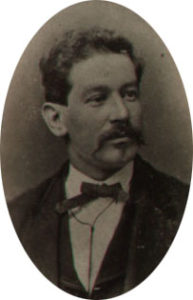
A Light in the Corner
When your great great great grandfather Arnold Abegg was nine years old, the missionaries came to his home in Switzerland. One night when he prayed he saw one corner of his bedroom become lighter and from it came a voice speaking in German saying: “Mormonism is the only true Church in the world.”
Source
Biography of Arnold Abegg, written by his wife Louisa Matilda Wilhelmina Haag Abegg.
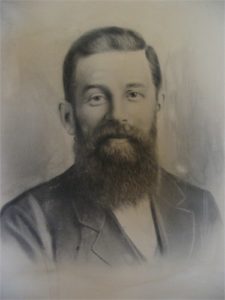
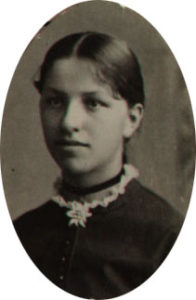
Music in the
Logan Temple
Your great great great grandparents, Arnold Abegg and Louisa Haag were married on the 22nd of October, 1884 in the Logan Temple. Arnold was 40 and Louisa was 15.
It was not easy to travel all the way from Payson to Logan, a trip of about 150 miles. Back in those days there were no cars to take them so they had to go by horse and wagon. Both Arnold’s and Louisa’s mothers were with them and they spent the first three days of their honeymoon doing temple work for their ancestors.
At the end of the first day Louisa heard music coming from the top floor of the temple as it was closing. She thought the temple must play music everyday as people are leaving and commented to one of two sisters near her in the dressing room how beautiful the music was. This woman said she heard it but the other did not. Louisa felt sorry for the second woman, thinking she was deaf. When she mentioned this to Arnold he said, much to Louisa’s surprise, that he had not heard any music. The next day Arnold asked workers about the music and was told that they did not play music at the temple.
Sources
-Biography of Arnold Abegg, written by his wife Louisa Matilda Wilhelmina Haag Abegg.
-Life Story of Louisa Mathilda Wilhelmina Haag Abegg Done, June 1939.
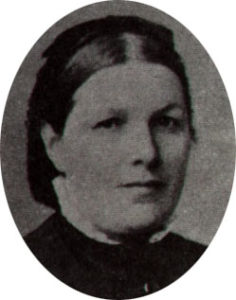
The Blind Millionaire
Every Wednesday and Saturday your great great great great grandmother Luise Haag would go to hospitals to care for the patients there. She would take her daughter Louisa with her. Sometimes they visited the mental hospital, and sometimes the hospital for the blind, or the deaf and dumb, or for the elderly. A blind millionaire named Mr. Koster heard of her service and began visiting Luise each month with his guide and would give her a considerable amount of money for her to use in her visits for the next month. During these visits Luise would report what she had done with the money from the previous month.
Source
Life Story of Luisa Molt Haag by Louisa Wilhemina Haag Abegg Done, June 1939.
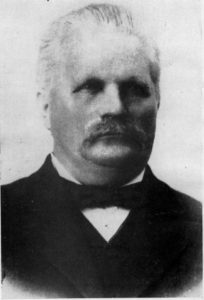
Spiritual Manifestation
Your great great great grandfather Miles Park Romney related the following when his son asked him if he had ever had any definite experiences or communications with the spirit world:
“Your aunt Carrie [Miles’ second wife] decided she could not stand the rigorous life in Dixie, so she left with our two children William and Mattie, and went to Salt Lake. She later remarried and gave birth to five children. Years passed, and one day after dinner I was lying on the sofa wide awake, and I heard Carrie’s voice as plain as life. She said “Miles, send for our children and take care of them.’ I called your mother and said ‘Hannah, Carrie is dead,’ and related what I had heard. Several days after I received a letter from my brother, George, telling me that Carrie had died at the time I heard the voice.”
Source
Life Story of Miles Park Romney by Thomas Cottam Romney, p. 296.
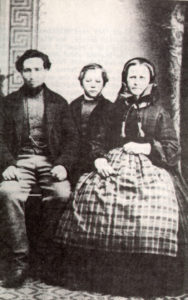
A Time of Sorrow Followed by Joy
On the last day of 1853 twenty-two-year-old Christian Jesperson married his sweetheart, twenty-year-old Ane Marie Johansen. At that time Denmark, the country where they lived, was at war with Germany. A few months after their marriage Christian was called to active duty to serve as a runner, carrying messages from one command post to another. He was given a medal for bravery and excellent service.
While Christian was away at war, Ane Marie gave birth to a son who died. Ane Marie was filled with sorrow and Christian did not return for another three years. A year after his return the couple had another boy, this time a healthy, robust baby. Christian and Ane Marie were so happy. After the custom of the day they named this baby after the first child who had died–Jens Peder. This baby grew up to be your great great great grandfather.
Source
A History of Christian Jesperson & Ane Marie Johansen by Bergeta J. Williams (a grand‑daughter).
“I Hear Fire a-popping”
When your great great great grandmother Emma Ida Johnson was a little girl she lived in an old house in Mount Pleasant Utah. Her father and her brother Jim began work nearby on a new, better house. Just before it was completely finished Emma’s sister had her birthday party there. The next day Emma’s mother was tired and went to lie down in her bed at the old house but asked Emma to make sure that the fire in the fireplace of the new house did not go out completely because she wanted to smoke some fish later. Time passed and Emma began to get lonely. So she took a big willow basket and filled it with wood chips and put it all in the fire so that it would keep going while she went to go be with her mother. While in her mother’s bedroom Emma fell asleep.
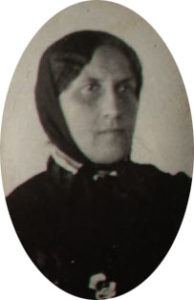
Soon Emma’s mother woke up and cried “I hear fire a-popping”. She ran out of the room to find the house on fire. The neighbors ran with buckets of water to try to save the house but it burned to the ground. Emma’s brother slept in the new house while it was being built so all of his bedding and many of the tools were destroyed too.
Emma was afraid for the punishment she would receive from her father when he and her brother would return at the end of the week. When Saturday came she hid in the cornfields. Her mother called to her and she entered the house trembling. Emma’s father sat her on his knee he patted her on the shoulder and said simply, “It is bad we lost our new house. You must take better care after this.”
Source
From the Autobiography of Emma Ida Johnson.
Louisa Haag
Your great great great grandmother, Louisa Haag grew up in Germany. She had six brothers but no sisters. Louisa attended an all girls school and played with the family maid. Louisa, all of her brothers and her father each played a musical instrument and her mother would sing. Louisa sang in the choir at the local Methodist church and later in the Baptist church. Her father often took the children on nature walks. She joined the Mormon church when she was thirteen and then emigrated to Utah. After arriving there she met and married your great 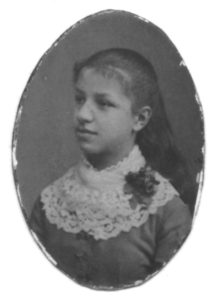 great great grandfather Arnold Abegg. They had four children before he died when Louisa was only twenty seven years old. A few years later Louisa married a man named Abraham Done and they had five children. Louisa liked collecting stamps, pictures, poems and quotes. She assisted many doctors in delivering babies and delivered 110 babies without a doctor being there at all. During her life she lived in Germany, Utah, Mexico, Texas, and Arizona, and visited many places in the United States. She was proud that all nine of her children had been through the temple and were active members of the LDS church. When she was seventy she participated in General Conference with a group of singing mothers from Mexico.
Source
Life Story of Louisa Mathilda Wilhelmina Haag Abegg Done, June 1939.
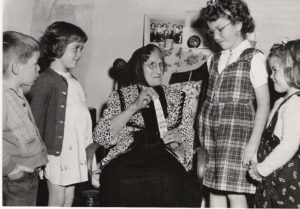
Emma Ida Johnson Tells of Being a Pioneer
“The earliest memories of my childhood days are of my seventh year when I crossed the plains for Utah with my father, mother, two sisters, and a brother. We couldn’t ride in our wagon as the oxen were so thin they could scarcely pull the wagon and our provisions. All they got to eat was what grass they could find when we camped. But as I was then a little girl, I had the privilege to ride more often than not and see my parents and brother and sisters walk the thousand miles to Utah. Our journey began at Omaha, Nebraska. Many, many people took sick and died as they couldn’t endure the hardships they had to go through and they didn’t have the nourishment they needed. My mother went around to visit the sick when we camped at night, and she always took food to give those who had less than we did. I sometimes went with her. I remember one of my playmates sickened and died, and I went to see her buried. There were no coffins to put the dead in; they were just wrapped in a quilt or blanket, laid on a bed of willows or brush, covered with more brush, and the grave filled the rest of the way with earth. There were many parents left their loved ones buried on the Plains; men their wives, and wives their husbands.
“Our long, weary journey finally came to an end in Salt Lake City. The Relief Society had a delicious meal set on a long table for the immigrants to enjoy. How beautiful the city looked to us with its peach trees loaded with lovely fruit and its streams of mountain water running in ditches along the streets.
“My mother had a brother living in Mount Pleasant in Sanpete County, and it was there we went to live.”
Source
Autobiography of Emma Ida Johnson Jesperson.
“I Would Never Marry a Danish Boy”
The parents of your great great great grandmother Emma Johnson emigrated to Utah from Norway. One day Emma’s father met a young man from Denmark named Jens Jesperson while they were both working on a job as carpenters. Emma’s father invited Jens to come work for him when he had no more jobs to do.
Two weeks later Jens came to the house. When Emma stepped into the room where her sister Mary was Mary teased her by saying there was a new beau come to see her. “I would not marry a Danish boy,” Emma said; “They have such 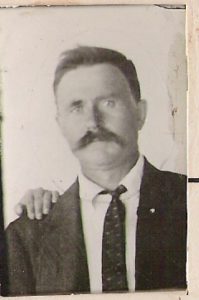 funny names‑‑Jorgensen, Sorensen, Petersen.”
Jens did not speak any English and Emma helped turn his Danish words into English. She had been teaching at a school for some time and Jens helped Emma by cleaning her school and arranging the benches for the next day. Jens sang Danish hymns to Emma which he had learned on his mission. While sitting together in the little school room Jens proposed to Emma. She couldn’t say no, having fallen in love with him. Once Jens’ mother and father emigrated to Utah Jens and Emma were married.
Source
Autobiography of Emma Ida Johnson Jesperson.
Surrounded by a Mob
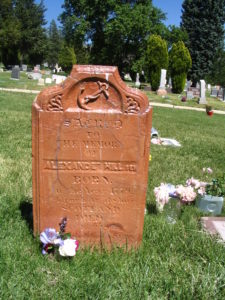
One July day in 1846 your great great great great great grandfather Alexander Hill was harvesting wheat with seven other men about twelve miles from Nauvoo when an armed mob surrounded them. The mob stole all of the firearms from the workers’ wagons. One of the men in the mob took a hickory switch and whipped each of the workers twenty times with it. Others took some of the stolen guns and smashed them over a stump. The workers were then ordered with an oath to get into their carriages and drive for Nauvoo and not look back. The mob fired a parting shot at them as they drove away.
Source
Lyman Littlefield Reminiscences (1888), pp. 167‑169.
The Ghost at the Cemetery
Christian Jesperson was your great great great great grandfather. As a young boy living i
n Denmark he and his friends would tell ghost stories to one another. One boy claimed that he had actually seen a ghostly figure in the nearby graveyard the past several nights walking among the graves, then rising up and down in one particular spot. The boys scoffed at this story but agreed to go near enough to see for themselves. They watched at a safe distance an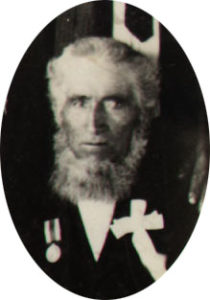 d sure enough there was the ghost as the boy had described. Christian was curious and said, “Let’s go closer and really see what it is.” No one would go with him, and although he was a little fearful, he decided to venture alone, determined to take a closer look. He found a grieving old woman whose husband had recently died. She had trudged out to the cemetery each night to sleep on his grave. The wind blowing her full white night‑gown gave the appearance of a figure rising up and down. Christian spoke kindly to her and persuaded her to go to her home. She agreed only when he promised to walk with her.
Source
A History of Christian Jesperson & Ane Marie Johansen by Bergeta J. Williams (the couple’s grand‑daughter).
Whom to Marry?
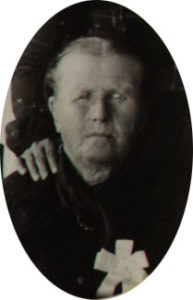
Louisa Haag had recently emigrated from Stuttgart Germany to Payson Utah. She was fifteen years old when two men began courting her. Louisa liked them both very much and they both wanted to marry her. Louisa’s mother asked the men to stay away for several weeks while Louisa decided whom to marry. Both men honored the request but one of them, Arnold Abegg, wrote a letter to Louisa every day. Arnold won! Louisa and Arnold were your great great great grandparents.
Source
Abegg family story.
Forbidden Drink
When your great great great great grandmother Ane Marie Johansen was six years old she worked as a servant girl herding geese on a large farm near the Danish village where she lived. On hot summer days she saw the hired hands stop their work for a moment and pour themselves a cool drink out of a large wooden barrel that sat conveniently under a shady tree in the back yard. Oh, how they seemed to enjoy this sparkling liquid; how delicious it looked. She longed for just a taste; she too, was thirsty and tired from chasing the geese to keep them away from the gardens.
“You must drink water,” they told her. “This drink is just for grown‑ups.” Forbidden drink, like forbidden fruit, is so tempting, so it was inevitable that one day when the master and mistress were away, she sampled the brew from the barrel, a foaming cupful which she drank hurriedly lest she be caught. Oh, the terrible churning in her stomach! The pain, the heaving. When the mistress returned she found the little goose girl on the grass pale and moaning. When questioned, all she would say was that she had an awful stomach ache.
“O, you poor little thing! I’ll fix you a toddy, and you’ll soon be well.” To Ane’s horror she saw her mistress go to the barrel and pour a cup of that once coveted amber liquid. “No, no!” Ane cried. “I feel better.” She clenched her teeth and refused to swallow a drop. She learned very young that strong drink is not good for the belly, and that crime does not pay.
Source
A History of Christian Jesperson & Ane Marie Johansen by Bergeta J. Williams (a grand‑daughter).
Kind Strangers Help During a Hard Trip
When your great great great grandparents Emma and Jim Jesperson were a young married couple they decided to move from Richfield Utah to Brigham City Arizona to be with Emma’s sister Mary and her family (a journey of about 400 miles). Emma and Jim had a fourteen month old girl and Emma was three months pregnant with her second child.
A big wind came up during their first day traveling and blew the top off their wagon. Jim had to act quickly to nail down the cover. Snow descended all that night and into the next afternoon. The second night the family had to battle with a hard frost. The potatoes and bread were frozen solid as was the chicken Emma had prepared for lunch. The milk for the baby was a block of ice. It was a clear day so Jim found some sticks to build a little fire to thaw the frozen food. As the day warmed up the little family began to feel better.
It took them a week to get to St. George. While there Jim and Emma went through the temple and were sealed to each other for time and all eternity. After spending the night with friends in St. George, Jim and Emma were back on their way.
After a couple of days they came to a place known as Hurricane Hill. The road began to get steep there and Emma had to be ready at any moment to throw a rock under the back wagon wheel to prevent the wagon from rolling down the hill. That day Emma especially felt the effects of morning sickness. After some rest and some peppermint tea, she felt well enough to continue.
They left some of their heavy things by the roadside so they could get to a ranch before dark and buy feed for the horses and milk for the baby. It was night and cold before they came to a house. They could see that there was a good fire in the fireplace, and two or three boys were dancing while one played the fiddle.
A pleasant‑faced woman opened the door when Jim knocked and let them in. Emma and her baby we placed by the fire while the boys showed Jim where there was a stack of hay. Emma asked to buy some milk for her baby, but the woman said, “I’ll give you what you want.” She brought in a pitcher of new milk and the baby got all she could drink. “Now don’t go out in your cold wagon to sleep,” the lady of the house said. “You can make a bed on the floor close to the fire.”
The boys of the house entertained Jim and Emma with their fiddle playing and sang a few songs. Early the next morning Jim went back for the things they had left on Hurricane Hill. The kind lady got the family a good hot breakfast‑‑ham and eggs, and biscuits with fresh butter. Jim was back at noon so after dinner they started on their journey again.
It took another two weeks before they finally arrived at Brigham City. Emma had sent word with a family traveling ahead of them what day they should be expected. When they arrived Mary’s children ran to meet them from their long, hard journey.
Source
Autobiography of Emma Ida Johnson Jesperson.
“Tell Your Father He Can Have the Hay He Wants for Nothing”
When your great great great grandparents Emma and Jim Jesperson were a young couple they moved from Richfield Utah to Brigham City Arizona. At that time they only had one child–a fourteen month old baby girl. Over the next eight 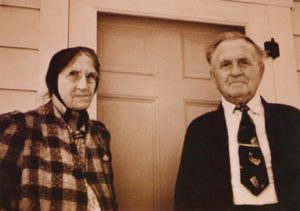 years Emma and Jim had four more children. Emma’s parents still lived in Richfield and had never seen these new children. So Emma and Jim decided to take them to meet their Grandma and Grandpa Johnson. Emma and Jim packed up their family on a cold March day and began the journey from Moab, Utah, where they were now living, to go to Richfield. When they arrived a few days later they did not drive their wagon right up to the house. Instead, they decided to have nine-year-old Ida and seven-year-old Jimmy go to the door and ask if their father could buy some hay for the horses. When Grandma Johnson opened the door the children asked their question and Grandma Johnson said she did not have any hay to sell. After the children turned away she became curious and asked “What is your father’s name?” When Ida told her, she embraced them with joy and said, “Go tell your father he can have all the hay he wants for nothing.”
Source
Autobiography of Emma Ida Johnson Jesperson.
Priesthood Meetings Had to be Held in Secret
On their ninth wedding anniversary your great great great great grandparents Christian and Ane Marie Jesperson joined the Mormon church. They were anxious to share their new faith with friends and family. Christian and Ane were surprised that family members shunned and ridiculed them and former friends became bitter enemies. But they remained faithful to their new church.
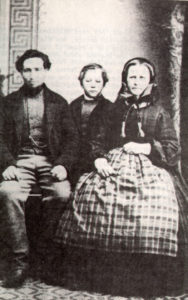
Their meetings were often disturbed by hecklers. Priesthood meetings had to be held in secret in the evenings. Even then groups of ruffians would search out the place and wait in the darkness until the men emerged when they would pounce on them to kick and gouge and beat them with sticks. They seemed to take a special delight in grabbing Christian by his thick black hair and pulling out great hands full of it. Only fleetness of foot saved him from many a brutal beating.
It was not until sixteen years after the Jesperson’s baptism that they and their only child Jens Peder began the process of emigrating to Utah. Jens, then twenty-one, went first in hopes of finding work so that he could help pay for his parents’ passage. His fare on the ship Nevada cost the family $290. Jens worked as a carpenter and on the Johnson family farm in Richfield. He earned money for his mother in Denmark so that she could make the trip. The next year Ane Marie emigrated on the ship Wyoming. The fare was now $293. Christian joined them the next year traveling on the ship Wisconsin at a fare of $301.40.
Sources
-A History of Christian Jesperson & Ane Marie Johansen by Bergeta J. Williams (a grand‑daughter).
-Autobiography of Emma Ida Johnson.
“The Saddest Birthday of My Life”
On July 7th, 1892 your great great great grandmother Emma Jesperson had a baby boy. Her oldest child, Ida, who was almost eleven-years-old, felt bad that she couldn’t get a baby sister for a change. Emma had already had four other boys including your great great grandfather Oscar. Emma told Ida that she could name the baby. That pleased Ida. She decided to name him after her cousin Wilford. Shortly afterward Ida’s Grandmother Jesperson came with two pairs of stockings and a pair of shoes and announced that she wanted to name the baby. It was to be Antone after a Danish friend, Apostle Lund. Ida wept when she heard it, so in the end the baby was named Wilford Antone. He developed pneumonia and died at the age of a year and nine months. It was the first time death had come to the family. The funeral was held on Emma’s birthday, April 20. She called it the saddest birthday of her life.
Source
Autobiography of Emma Ida Johnson Jesperson.
Temple Builder
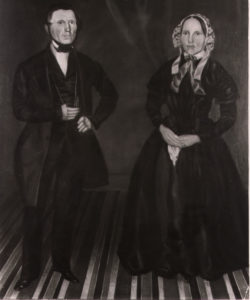 Two of our first ancestors to join the church were Miles and Elizabeth Romney, who were your great great great great grandparents. They heard the missionaries speaking in a place in England called Market Square. They listened to Heber C. Kimball, Orson Hyde and Willard Richards give sermons there. On November 11, 1837, only six and a half years after the Church was organized, they were baptized. Three and a half years later they sailed from England to New Orleans and soon joined the Saints in Nauvoo. Miles worked as a carpenter in the construction of the Nauvoo Temple and later, in Utah, he was in charge of all construction for the St. George Temple and the St. George Tabernacle.
Sources
-History of the Church, 4:296.
-Our Pioneer Heritage, 10:538 & 14:399.
-Marion G. Romney, Conference Report, April 1960, p. 110.
“Who Would Want to Marry An Old Man Like Me”
Your great great great great grandparents Andrew and Elizabeth Johnson joined the Mormon Church in Norway. After immigrating to America they eventually settled in Richfield Utah. While there Elizabeth suggested many times that Andrew should marry another wife.” Andrew, you know we can’t be exalted unless we obey all of God’s commandments not just the ones that please us.” Andrew would admit that she was right, “But who would want to marry an old man like me?” he laughed, because he really didn’t want another wife. Elizabeth told him “You were my first love, and you will be my last, I wouldn’t want any woman to take my place in your heart, but I know of a girl who would marry you. She is a young girl that I love, and you can learn to love her, too.” Elizabeth told her husband often enough to convince him. So, on the 13th of May, 1887 Andrew married Caroline Pilling from Fillmore. Caroline was eighteen years old, Andrew was sixty-three.
Source
A History of Elizabeth Marie Christoffersen & Andrew Madsen (Johnson). By Bergeta J. Williams (a grand‑daughter).
Arnold Abegg’s Occupations
The Abegg family in Switzerland was quite well to do, and much money was spent for Arnold’s education. Arnold was your great great great grandfather. He was a mechanic, millwright, engineer, cabinet maker, contractor, and his future wife, Louisa said he had a mind for business as well.
Arnold worked in John Beck’s mine near Salt Lake City, Utah, where he got sick from exposure to the minerals, and suffered each spring from the effects of this. Later, in Payson, Utah, where his family located, he was contractor of the flour mill when it was built; and soon after he was in charge of the building of the school.
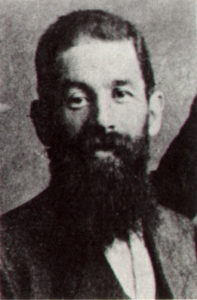 Arnold built a treasure‑chest made of 2,483 pieces of different kinds of woods, varnished to show the different shades and colors. The inlaid work of the box was American stars and Swiss crosses, indicating so many years in America, and so many years in Switzerland.
He also built a well‑boring machine for drilling Artesian wells. He drilled one flowing well for David Fawn’s field, and earned $80.00 in less than two days. Brother Fawn gave Arnold one of his best cows as payment.
Soon after this the drilling machine was turned over to James Butler, whose home Arnold and his wife, Louisa, were expecting to buy, but they could not keep up the payments. Arnold’s health was not the best, and he got so he could not stand a full day’s work, so he spent most of his time at home doing odd jobs and repairing of every kind.
Source
Biography of Arnold Abegg, written by his wife Louisa Matilda Wilhelmina Haag Abegg
The Best Trade Ever
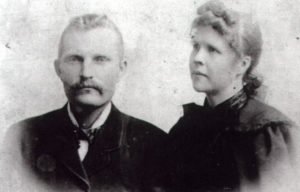
When Hannah Romney joined her husband Miles in Mexico they had no cow to provide milk and butter for their large family and the families of Miles’ other wives. One day Miles said to his son, who was also named Miles, that he wished there was some way he could trade one of the family’s horses for one of the cows belonging to a Bro. Galvin. The younger Miles went to Bro. Galvin’s and returned with three cows. His father said that he thought it was the best trade he had ever heard of. From then on young Miles did all the trading for the family. He was your great great grandfather.
Source
Autobiography of Hannah Hood Hill Romne
The Trials of Hannah Hood Hill Romney
When your great great great grandmother Hannah Hood Hill was only four years old her mother died in Winter Quarters, Iowa. Not long after that her father left for Utah to find a place where He and Hannah and Hannah’s brother and sister could live. While she waited for her father to send for her she did not live with her brother and sister because they had all been sent to stay with different families. Two years later her father sent for her. She was very excited about making the trip but soon realized how hard it was going to be. She traveled with strangers and the first day out they cut off her hair. Hannah did not have any shoes to wear for the long journey. Sometimes she would go for two or three days without any water.
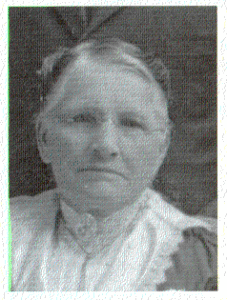 After Hannah arrived in Salt Lake City she attended the first Sunday School ever organized by the Church and participated in the very first 24th of July Parade. She was married in the Endowment House in 1862 to Miles Park Romney. Hannah was nearly twenty years old and Miles was only eighteen. When Miles left for a mission to England one month later Hannah felt that the only friend she had had left her.
While her husband was gone she did whatever she could to support herself and her baby which arrived eight and a half months after Miles left. She learned how to make gloves, performed nursing, washing, sewing and any other honest job she could find. She would wash all day from sun up to sun down for a dollar.
A little over a year after Miles returned Heber C. Kimball and Brigham Young instructed Miles to marry another wife. Hannah prayed for a testimony of the truthfulness of Plural Marriage feeling it was more than she could endure but wanted to sustain her husband. A few months after Miles took a second wife, Hannah’s nine month old baby died.
After establishing a comfortable home in Salt Lake City the family was called to settle St. George Utah. Once there the family lived in a shack or the wagon they traveled in. Eventually Hannah lived in a nice home in St. George but had to leave that for the rough county in St. Johns Arizona when her
husband was called to settle there. In St. Johns the family lived in a lumber house and slept in tents and wagons. Twenty‑one people lived in the house. With the noise and confusion Hannah sometimes felt as if she would go crazy. The first winter the family had no cow. So they lived mostly on bread, beans and gravy until they all got so sick of that kind of food they felt they never wanted to see it again. During the winter snow drifted through the cracks in the house and gathered inches high onto the family’s bedding. Hannah would get up early in the morning, shake the snow off and start a fire before the children would wake up.
Hannah’s husband had to flee Arizona to avoid being captured by federal marshals for polygamy. For a long time Hannah had to care for her nine children alone. Eventually Miles sent for her to join him in Mexico. During her journey Geronimo was on the warpath in that area and many people warned her not to travel because of the great danger involved. But she was determined to get her young family down to Mexico. On one stretch of road four days earlier Indians had killed three men and three horses. Hannah’s oldest boys removed the shoes from the dead horses and put them on their own horses.
When the family arrived in Mexico conditions were very primitive. Hannah nearly died giving birth to her eleventh child in a dugout. While in Mexico her children contracted malaria and diphtheria and typhoid fever.
Hannah said that upon her husband’s death in 1904 she was so grief stricken she thought she would lose her mind. For months afterward she couldn’t sleep and even prayed that she might die. A year later she nearly did die of pneumonia.
After stays in Salt Lake and Safford, Arizona she returned to Dublan, Mexico only to be driven from her home by Poncho Villa and his men when the Mexican Revolution broke out.
Source
Autobiography of Hannah Hood Hill Romney.
Typhoid and Consecrated Oil
While living in Mexico Eugene and Leo Romney came down with Typhoid fever, a disease that kills many people. They were two of the sons of your great great great grandmother Hannah Romney. One day when they were both extremely ill Hannah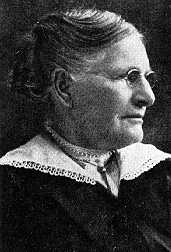 went to the side of the house and poured her heart out to the Lord asking what she should do to save them. She heard a voice which said “give them consecrated oil.” The doctors had prohibited typhoid patents from having any type of oil. But the feeling that rested on Hannah was so strong that she felt it must be of the Lord.
When she told Leo of her experience he said that he would take nothing but consecrated oil. Every day she would give the boys three tablespoons of consecrated oil. Each time she asked the Lord to let her know if she was doing the right thing. Each time it was made known to her that what she was doing was right. Eventually both boys were completely healed.
Source
Autobiography of Hannah Hood Hill Romney.
Dolls to Help Learn English
When your great great great grandmother Louisa Haag was fifteen years old her mother and younger brother were preparing to leave their home in Germany to join Louisa’s older brothers in America. Louisa’s mother began packing some of Louisa’s childhood dolls to take with them. She protested saying that she was too old for these dolls and didn’t mind leaving them all in Germany. Louisa’s mother insisted, explaining that she needed to learn how to speak English in America and that the dolls would help her make friends who in turn would help her to learn to speak English. The plan worked perfectly.
Source
Life story of Louisa Mathilda Wilhemina Haag Abegg Done.
Baptism in Frozen River
In the 1880s Mormon missionaries in Stuttgart Germany held their meetings in the home of your great great great great grandparents Adolph and Luise Haag. Many people there did not like the Church and meetings had to be held in secret so that the police would not find out what they were doing. They would not sing, and people who attended the meeting came and went in small groups of two or three people, sometimes arriving many hours early or leaving many hours later, so that no one would suspect a meeting was being held in their home.
Baptisms had to be performed in secret too. Adolph and Luise’s daughter, Louisa (your great great great grandmother) decided to be baptized when she was thirteen. Elders Charles Schneitter from Salt Lake City and Elder Carl Schramm from Payson took her to the Neckar River at eleven o’clock at night. They had to cut a hole in the frozen river to perform the baptism.
Source
Life Story of Louisa Mathilda Wilhelmina Haag Abegg Done, June 1939.. Recollections of Lorna Call.
Three Bullets Into the Ceiling
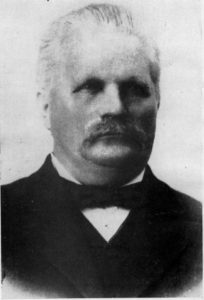
Brigham Young assigned your great great great grandfather Miles Park Romney to establish a dramatic society in St. George Utah. Miles was a wonderful actor and organized theater companies in Arizona and Mexico as well as the one Brigham Young asked him to establish in St. George.
During one performance in St. George while Miles was playing the villain, he told the heroine (played by his sister) in a booming voice that he would never let her see her children again. “Never! Never! A thousand times never!”
A member of the audience became so involved in the play that he rose to his feet brandishing his gun and yelled, “You let them see her again, or else!” as he fired three bullets into the ceiling.
Sources
-Autobiography of Hannah Hood Hill Romney.
-Romney Family story as cited by Jennifer M. Hansen in Letters of Catherine Cottam Romney, Plural Wife, p. 13.
Miles Returns Home From His Mission
When it was time for your great great great grandfather Miles Park Romney to come home from his mission to England he was put in charge of a group of people immigrating to America. The ship landed in New York and Miles made sure that these Saints all got on the train to Utah. Then he and other Elders returned to New York to hold meetings. On his way back to his home in Utah he stopped in Missouri and discovered that a cholera epidemic had broken out. Three or four people were dying everyday because of the disease. Miles was kept busy administering to the sick, making coffins, and preaching at funerals. Eventually he joined a company of four hundred Danish Saints on their way to Utah. One day they were attacked by Sioux Indians who killed one of the men. Finally he returned to his wife Hannah on the 28th of October, 1865–three and a half years after he left for his mission. He had never seen his daughter Isabelle because his mission began just one month after he and Hannah were married.
Source
Autobiography of Hannah Hood Hill Romney
Adopted by the Browns
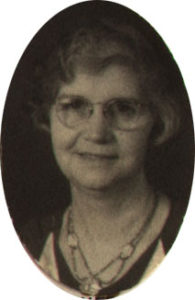
When your great great grandmother Sadie Elizabeth Strange was only four years old her mother died while having a baby. There were nine children in the family, all fifteen years old and younger. The Relief Society President came to Sadie’s father, John, and told him there where many people willing to have the younger children in their home until he felt that he could take care of them. One couple, however, wanted very much to adopt Sadie as their own. John agreed, so three days after her mother’s death Jorgen and Annie P. Brown adopted her.
Source
Autobiographical writings of Sadie Elizabeth Strange Brown Simonson Buckley
Mob Attacks Theodore Turley
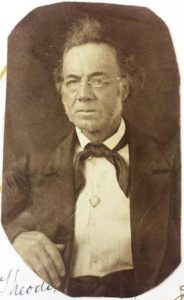
In April of 1839 twelve men went to your great great great great grandfather Theodore Turley’s house with loaded rifles to shoot him. They broke seventeen clocks into small pieces of wood. They broke tables and smashed in the windows; while the county judge, Samuel Bogart, looked on and laughed. A man named Whitaker threw iron pots at Theodore, one of which hit him on the shoulder. When Whitaker saw this he jumped and laughed like a madman. The mob shot down cows while the girls were milking them. They threatened to kill Theodore but finally left.
Source
History of the Church, Vol. 3, p. 322.
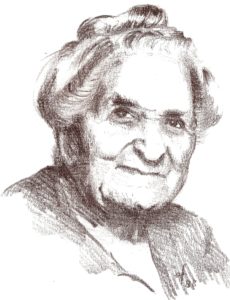
Visits From Eliza R. Snow
Eliza R. Snow came to St. George Utah in 1880 to establish the Primary organization. She wanted your great great great grandmother Hannah Romney to serve as the Stake Primary President there. Hannah was already serving as a counselor in the Stake Relief Society presidency and as the President of her ward Relief Society and told Sis. Snow that as a mother of many young children she did not feel that she could do justice to so many callings.
During another visit Sis. Snow asked if Hannah’s children could come in to see her. When the children arrived Sis. Snow let them handle a watch which belonged to the Prophet Joseph Smith.
Source
Autobiography of Hannah Hood Hill Romney.
“I felt he must be in Court to keep his word”
In the late 1800s your great great great grandparents Miles Park Romney and his wife Hannah lived in St. Johns, Arizona. Miles had a number of professions there. He was a lawyer, a home builder and a newspaper publisher. Miles entered into a contract to build houses in a town called Nutrioso which was about 50 miles away. He and Hannah with some of their children decided to live there while Miles built the houses. Before they left, Miles promised a man that he would represent him in court in St. Johns the next week. The night before he was to return to St. Johns Hannah became very ill but she encouraged her husband to fulfill his promise.
After Miles left Hannah had a miscarriage, losing twins. She continued to bleed very heavily. The Elders came and gave her a blessing but she did not get better. One of the men wanted to go get Miles but Hannah would not let him, feeling that her husband must keep his word by going to court.
Hannah asked her oldest daughter to make sure she did not go to sleep because she was sure she would not have the strength to ever wake up again. She was so weak she could hardly speak or raise her hand. During this time she prayed that Heavenly Father would allow her to live so that she could raise her children.
Finally someone did go to find Miles. It was dark and the man traveled in the wrong direction all night. When he eventually overtook Miles the next morning he explained Hannah’s condition. Miles immediately knelt down and asked Heavenly Father to save his wife. He got a fresh horse and rode as fast as he could to be with her. When he arrived she told him that if he gave her a blessing she was sure she would begin to get well. He did and a short time later she recovered.
Source
Autobiography of Hannah Hood Hill Romney.
Money Sewed in the Clothes
When your great great great grandfather Miles Park Romney was living in St. Johns Arizona he became a defendant in a criminal case. He was arrested for polygamy and taken to Prescott Arizona where the federal courthouse was at that time. He was released on bail but instead of going back to Prescott to stand trial, he went to the town of Snowflake to hide. Federal Marshals would go to the Romney home in St. Johns all hours of the day and night hunting him down.
One night after midnight a marshal came to the family’s door with a gun in one hand and handcuffs in the other. He said he was authorized to take Miles to jail. Miles’ wife, Hannah, told the marshal that he was not there.
The next morning Hannah sewed all the money she had into the clothes of her oldest son who was also named Miles. This boy became your great great grandfather. He rode all day and well into the night to get to his father with the money and a letter from Hannah telling him not to return to St. Johns for the time being because the marshals were sure to capture him.
Source
Autobiography of Hannah Hood Hill Romney.
Grave Robber
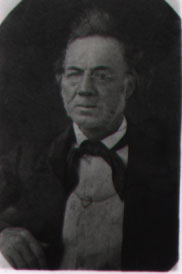 When your great great great great grandfather Theodore Turley left for his mission to England he was very sick. The wagon he was traveling in tipped over just as he and his companions left Nauvoo and one of the men with him had to carry him back into the wagon. A little while later some gentlemen met them and when they saw how weak Theodore and Apostle George A. Smith were they jokingly asked the driver “Mr.., what graveyard have you been robbing?”
Sources
-History of the Church, 4:10.
-Comprehensive History of the Church by B.H. Roberts, 2:24‑25.
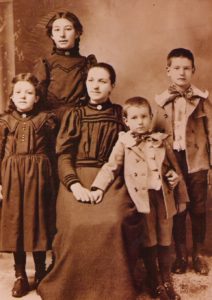 A Nephew Remembers His Aunt Louisa
In 1981 Ione Simonson, Gene and Marzelle Mangum and Lela Dalton visited the home of their cousin Joseph Haag who was living in Sacramento, California. They were there to talk with him about his memories of his aunt Louisa Mathilda Wilhemina Haag Abegg Done, who was your great great great grandmother.
Joseph remembered that when he was a boy his family lived with Aunt Louisa in Payson, Utah. One day Louisa’s cow ate too much grass. Sometimes a cow will die if it eats too much. So Louisa devised a way to stop the cow from eating any more and to cause the cow to throw up some of the grass. She put a stick upright in the cow’s mouth and tied it to the cow’s horns so it would be forced to breathe through its mouth. She had the children walk the cow around the yard so it wouldn’t bloat. This did the trick and the cow lived, which was an especially good thing because the cow was Louisa’s main livelihood.
Joseph said another way Louisa made money was to collect silk worms from the mulberry bushes, raise them, and sell the cocoons.
Louisa also made the best plum jam he ever tasted. She made her own soap which was poured onto a board. Once, after the soap had dried, Joseph was allowed to cut it into bars. Louisa took care of a woman who had a diseased hip. The odor was terrible, Joseph recalled.
With tears in his eyes Joseph said that Louisa sent him a birthday card from the time he was five years old until the day she died. On his fifth birthday she gave him a little china dog wrapped inside ten consecutive packages. He kept it until he was twenty-one when a little girl visiting his house deliberately broke it. Joseph said if the little girl had stepped on his heart it could not have hurt worse than that did.
Source
Notes by Ione Simonson and Marzelle Mangum of visit with Joseph Haag, July 9, 1981.
Doctor Haag
When your great great great great grandmother Luise Haag joined the Mormon Church in Germany she wanted to travel with her family to America to live with the Saints in Utah. Before she could make the trip, however, she became very sick and had to go to the hospital. Throughout the next week the doctors said she would die. Each day when Luise’s husband closed up his shop he would bring their five boys and one daughter to see their mother. As they were gathered around her bed she asked them to sing “Come Come Ye Saints.” As they sang “We’ll find a place which God for us prepared. Far away in the West” she would nod her head in agreement for she believed that despite what the doctors had said, she would get well enough to travel to Utah. The missionaries gave her a blessing and she recovered.
Luise did travel to Utah where she settled in the town of Payson. She was a midwife and delivered many babies there. People called her Dr. Haag. She had her own little pharmacy where she sold medicines. Sometimes people who were not really ill insisted on having something to cure them. She would give these people fake pills which she had made out of flour and sugar and tell them to take two that night, two in the morning, and another two at noon. After a few days of this these people came back to her all better saying those were the best pills they had ever taken.
Sources
-Notes by Ione Simonson and Marzelle Mangum of visit with Joseph Haag, July 9, 1981.
-Life story of Louisa Mathilda Wilhemina Haag Abegg Done.
© Richard K. Pyper, 2018. All rights reserved.